
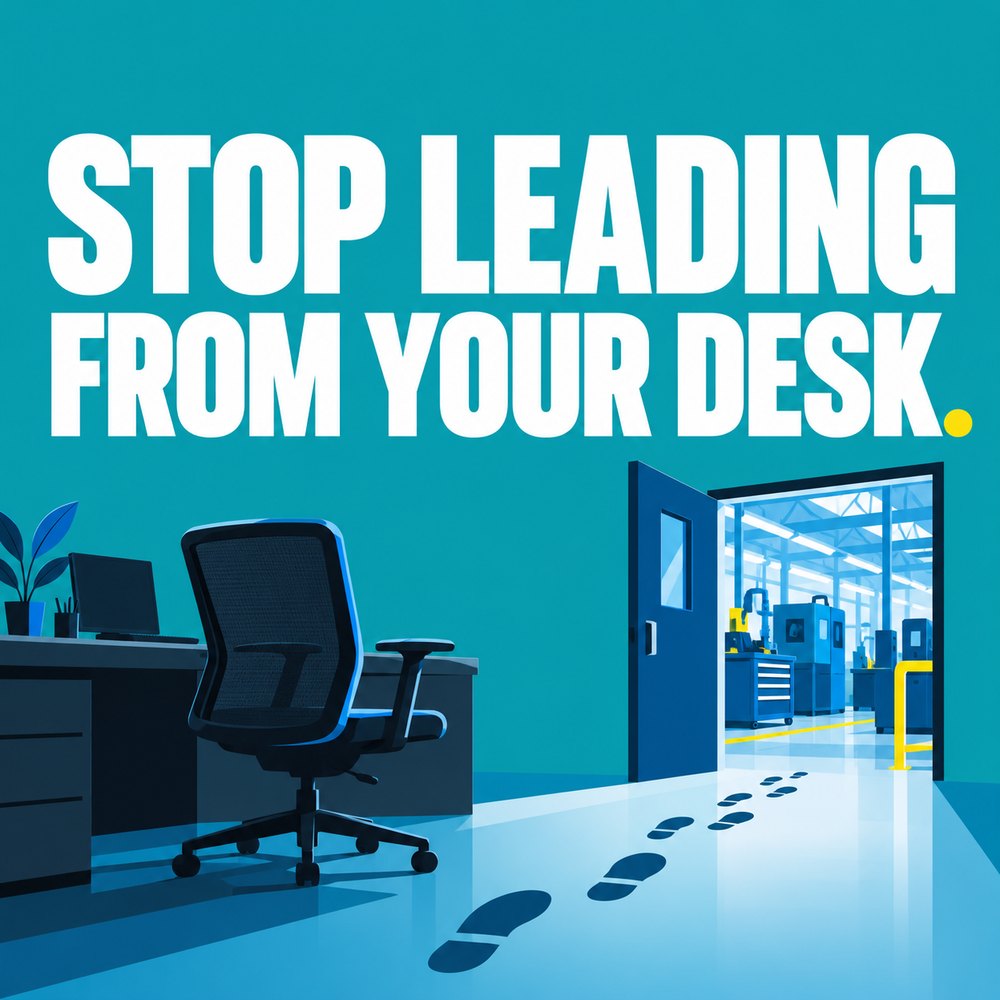
When I stopped leading from my desk and started walking the floor, everything changed.
I could see how the work was actually moving. I could hear what people were frustrated about. Problems made more sense when I was standing beside the work instead of trying to reconstruct the situation from my office.
In lean manufacturing, it's called a gemba walk: going to the place where the work actually happens.
You don't need the term to do it. Get up, walk around, and see how your people are doing.
Give people a reason to talk to you
If the only time you show up is when something is wrong, people are going to react accordingly.
They'll prepare an explanation. They'll clean something up before you get there. They'll tell you what they think will end the conversation fastest.
That's not going to give you a useful picture of the operation.
Don't walk the floor looking for somebody to catch. Look at how the work is happening and what would make it work better. Ask what is slowing people down. Ask whether they have what they need for the next job. Ask what they've had to work around today.
Then listen long enough to get past “we're fine.”
Someone may have a workaround they've used for months because they gave up waiting for the actual problem to get fixed. Standing there with them gives you a chance to understand it.
Say something when the work is good
Give the kudos.
Even if praise doesn't come naturally to you, make a point of noticing what people are doing right. Be specific enough that they know you actually saw it.
If someone caught a drawing issue before a part was cut, recognize that. If they prepared the next person's work so the handoff went smoothly, say so.
You don't need a speech. You need to acknowledge the work instead of making every interaction about what needs to be fixed.
Walking the floor also helped me get a feel for morale that I couldn't get from my desk. A change in how people interacted, frustration around the same issue, someone who was unusually quiet. None of those things tells you the whole story, but they give you a reason to check in.
Follow through on what you hear
You aren't going to solve every problem on the walk. Some need more information. Some need money, a decision, or help from someone who isn't standing there.
But you can make sure the issue doesn't disappear as soon as you return to your office.
Write it down. Decide who is taking the next step. Tell the person when you'll follow up. If the answer is no, explain why. If it's taking longer than expected, say that.
Asking for input and doing nothing with it gives people a reason to stop offering it.
Being available helped protect my time
One thing surprised me: walking the floor twice a day reduced the interruptions in my office.
People knew I would come to them. They could save a routine question for that conversation, and we could talk through it with the work right in front of us.
That was my experience, not a guarantee that two walks will fix everyone's schedule. Urgent issues still need a way to reach you immediately. But predictable access made a difference for my team and for me.
You still have work that needs to happen at your desk. So do I.
Just make sure some of the information guiding those decisions comes from time spent with the people doing the work.

Taylor Ehlmann is an operations leader and ISO 9001:2026 Lead Auditor who writes about building processes and teams that keep getting better. More about Taylor