The shop builds a part from an outdated drawing.
Now we have scrap, rework, a schedule problem, and somebody asking how this happened.
The answer comes back: the employee should have checked the revision. We'll remind everyone to be more careful.
Okay. What changed?
The old drawing is still available. The revised drawing still moves through the same handoff. Nobody has clarified who removes the obsolete copy or how the person doing the work knows a change has been released.
We've had a conversation. We haven't fixed the process.
Find where the mistake became possible
Start with the actual path the information took.
Where was the current drawing stored? Where did the employee get their copy? When was the revision released? Who needed to know, and how were they supposed to find out?
If a revised file sits in a shared folder while an old printed copy stays with the job, you have two versions available to the person doing the work. Telling them which one they should have chosen doesn't resolve why both were there.
Walk the handoff. Look at the files, paperwork, permissions, and timing. Ask the people involved to show you what they actually do.
You may find a process nobody owns, a notification that never reaches the floor, or a check that's written into a procedure but impossible to complete with the information available.
You may also find that the process is clear and someone knowingly bypassed it. Find out. Don't decide before you've looked.
Stop the immediate problem and then address the cause
If the wrong drawing is in use, you need to contain the issue. Identify potentially affected work, get the correct information to the people who need it, and decide what needs inspection or disposition.
That handles the immediate risk. You still need to address how it happened.
The right change depends on what you find. It might mean controlling where released drawings are accessed, assigning responsibility for removing obsolete copies, or verifying the revision at a specific handoff.
Don't add six signatures just because a mistake was expensive. A check needs a purpose, a clear owner, and a place in the process where it can actually catch the problem.
Otherwise you've created more paperwork for the next person to work around.
Retraining needs a reason
Sometimes training is exactly what's needed. Maybe the process changed and no one taught the new method. Maybe the original instruction was incomplete, or the employee never had a chance to practice.
If that's what happened, address it. Teach the task and verify that the person can do it.
But if they were correctly following an outdated instruction, repeating the same training isn't going to give them a current drawing. If the required information arrives after production starts, a reminder about attention to detail won't make it arrive earlier.
Write down what the training is intended to correct. If you can't explain that, “retrain operator” probably isn't a complete answer.
Make sure the fix survives a normal workday
A change that only works when the schedule is light isn't ready.
Test it with the people who use it. Does it work across shifts? Can the backup person follow it? What happens when a revision arrives after work has started?
Name an owner for the revised process. Train the affected people. Decide what evidence you'll review and when you'll check whether the change is working.
Look for more than an absence of reported mistakes. Can people reliably find the current information? Are obsolete copies being removed? Is the handoff happening as intended?
If the answer is no, adjust the process.
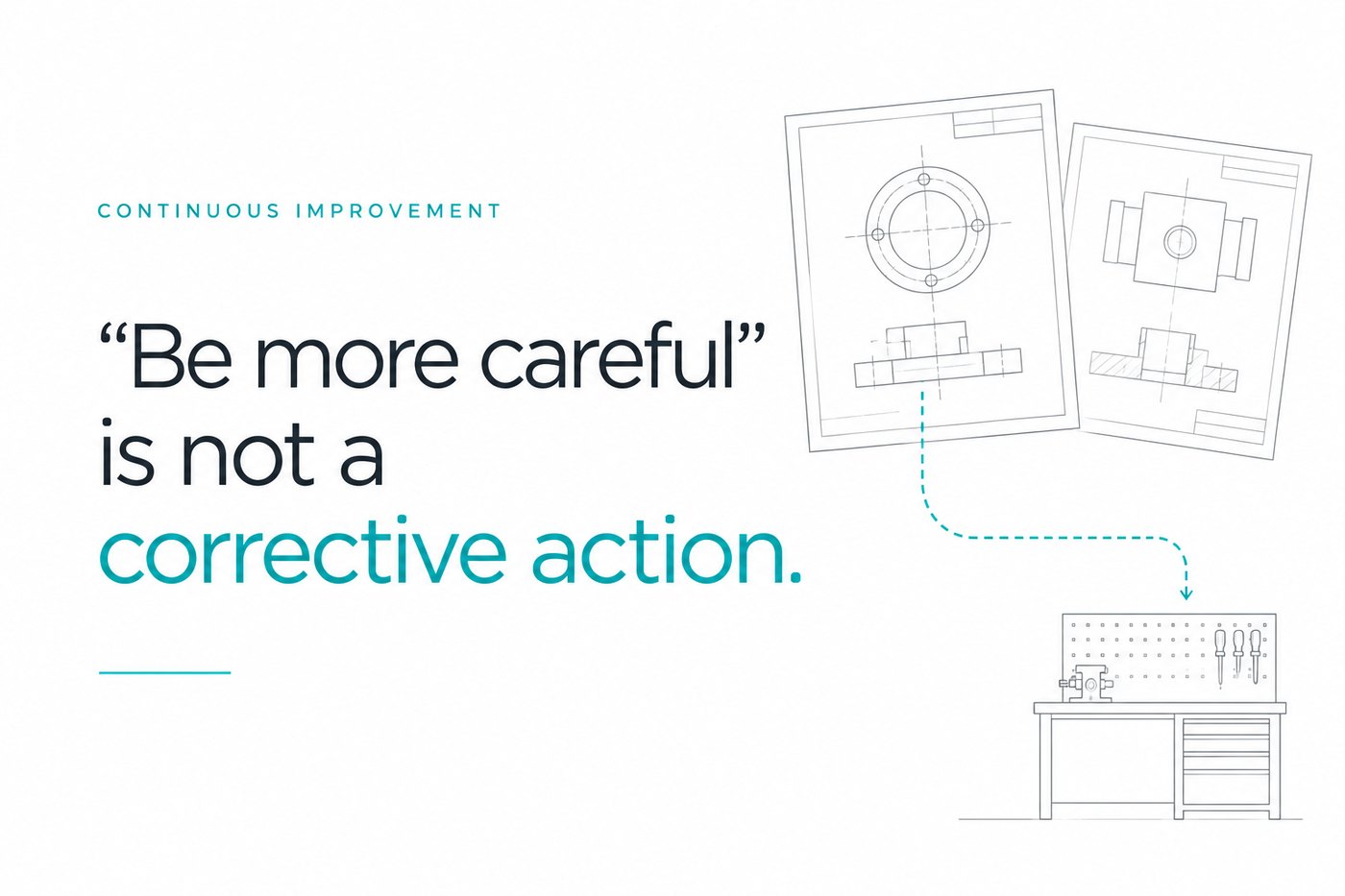
“Be more careful” asks the person to do better next time. A corrective action should give you a reason to believe the same problem is less likely to happen again.

Taylor Ehlmann is an operations leader and ISO 9001:2026 Lead Auditor who writes about building processes and teams that keep getting better. More about Taylor